LinkedIn

LinkedIn
Click the image to view Author Linked In Profile

Saturday, 30 January 2021


Must-Have Tools and Techniques for Project Managers in 2021


Introduction
Of course, there are many project management tools and techniques, and they vary among organizations. The tools and techniques discussed in this article are the ones I use, and I would be lost without them. It is important to always be on the cutting edge of project management, and I want to avoid anyone deriding me as a dinosaur project manager from the 80s or 90s.

It is a lot of work to stay current. My organization uses a vendor-provided, web-based application for our dashboard and project plans. This vendor provides emails with new trends in project management and free webinars. I get recordings of these webinars, too.

That is my main method of staying current. Like any industry, you stay current by reading the latest information, attending webinars, and collaborating with colleagues to avoid silos. Project managers must decide which tools and techniques apply to their organization and industry. I want to re-emphasize the following ones. 

Must-Have Tools and Techniques for Project Managers in 2021

1. A project manager must have a dashboard exclusively for project management. It is standard procedure and your top project management tool. Dashboards provide a quick health check of your projects. They are also a visual representation of your projects, and a picture is worth a thousand words. Dashboards should provide the status of each project and links to other information and key performance indicators (KPIs), like return on investment, earned value, customer satisfaction, cost variance, and so forth.

Management likes dashboards since they save time. You will get fewer calls from colleagues asking about the project’s status. Benefits include more collaboration, better decision making, and more agreement on status/next steps. Some of your colleagues will remember your dashboard more than almost anything else about you as a project manager. (Is that a good thing?) Ensure your dashboard is web based and that everyone else knows about it. Remember, like the project plan, always keep your dashboard presentable, updated, and instantly accessible. Make it eye-catching, with pleasing colors and significant bling (see Figure 1).
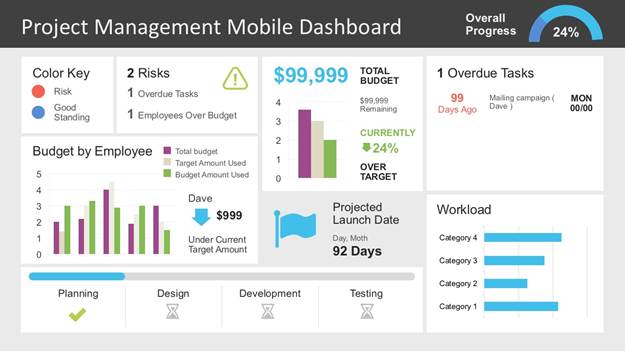
Figure 1: Project management mobile dashboard (SlideModel, 2020)

2. Do no be afraid of project plans. Some project managers do not like project plans. I cannot tell you how many vendors send me project plans and that is the last I ever hear about them. I get a project plan and the vendor never sends an updated one. Schedule a project status teleconference and always insist on updating the project plan to reflect the status. Avoid taking shortcuts, instead try to embrace the less desirable aspects of your job. Do not let vendors off the hook about keeping the project plan current.

Some project managers will do whatever is necessary to avoid using a project plan. Try not to be afraid of them. Break project plans into sections with subsections using colors, so the project plan is eye-catching. Try to avoid line after line of tasks in the execution phase. Instead, group similar tasks, like testing and training, by subphases. I know: Some project managers use other tools besides project plans, especially for agile. But I have not found anything superior to project plans.

I have seen many project plans without predecessors/dependencies—some project managers are afraid of them, but they are the glue that keeps the timelines in sync. Here is a refresher: finish to start (FS), start to start (SS), finish to finish (FF), and start to finish (SF). Again, use dependencies to determine the task order. The task that comes before is the predecessor. The task that comes after is the successor. You can have multiple predecessors for one successor task or a single predecessor for multiple successor tasks. Include Gantt charts since they are a good visualization for project manager presentations to the stakeholders—stakeholders often prefer viewing them instead of just lines of tasks in the project plan. The project owner is busy and consults that Gantt chart as a quick reference. Nothing makes a stakeholder’s eyes glaze over more than looking at endless lines of tasks in a project plan (see Figure 2).
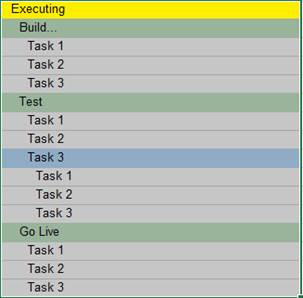
Figure 2: Task list (Boyer, 2020)

3. There is always a project charter, even if it is just an outline in an email. Sometimes it is a work order in your tracking system. But somebody must tell you what they want, when they want it, the project goals/outcome, budget, and so on. Spend as much time as necessary refining it until there is stakeholder agreement. Expect a fair amount of back and forth until you have a final project charter that clearly details all aspects of the project. Avoid just accepting whatever someone puts in front of you. Be proactive and polite.

4. An organization chart is important to help understand job titles and reporting relationships among stakeholders. I have seen project managers run projects without knowing who reports to whom, and that is a problem when resolving project issues. A project manager must know who can help resolve an issue with just a quick glance at an organization chart—and not waste time trying to figure it out when the clock is ticking.

5. Another useful project management tool is being proactive. Yes, project managers should be among the most proactive members in any organization. But after years at the same organization, a project manager can get stuck in a rut and slow down. Again, over time, you just seem to do the same thing every day and lull into inattention when you should always be trying to improve. Ask yourself every day if you are doing everything you can to be proactive. Take 10 minutes of your day to review each project and ask yourself whether you have done everything possible to make this project a success. Ask yourself, “Have I overlooked anything?”

6. Schedule a recurring meeting/teleconference with the project owner. It is amazing what people do not tell you unless you ask them. It is important to schedule a one-on-one meeting with the project owner to discuss the project status. Again, it is amazing what stakeholders will tell you one on one. Schedule that meeting with the project owner as soon as possible. Again, be proactive and polite.

7. Include swim lanes in your flowchart to visualize how the finished product will work. Again, a picture is worth a thousand words. The project manager or business analyst should provide a flowchart to visualize what is going to happen and when—and who or what is responsible for the action. Also, number each task in action in the flowchart. Stakeholders appreciate numbers to indicate the start/end and sequence of actions in a flowchart. No flowchart is complete without swim lanes and a number sequence (see Figure 3). Of course, a lot of my colleagues are visual and want to see a picture of how the project should work, and flowcharts provide it. Several times, a flowchart expedites a sign-off on the project charter instead of more delays and less time to complete an important project.
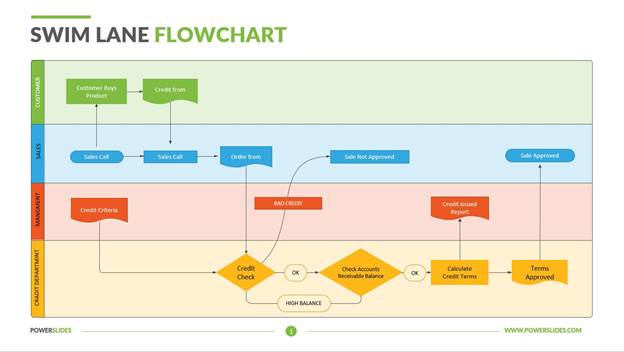
Figure 3: Swim lane flowchart (PowerSlides, 2020)

8. Insist on accountability. There is nothing more frustrating than constantly extending the start/finish dates of tasks because a stakeholder is too busy to finish them. Too many organizations allow stakeholders to delay tasks without any consequences. Stakeholders should use overtime to complete tasks. I know: Some stakeholders will look at you like you have lost your mind if you suggest overtime. Follow up with management as necessary and emphasize the impact to the schedule without the use of overtime.

9. Manage requirements. That is critical. If the requirements are not top notch, then it is all downhill from there. Schedule that requirements teleconference with the stakeholders and review the requirements. Do not trust stakeholders to thoroughly review the requirements on their own. Again, schedule that teleconference. Ensure that you review the requirements with the business analyst prior to that requirements meeting with stakeholders. Also, review the test cases with the quality assurance analyst.

10. Watch scope creep. Project managers often overlook asking stakeholders to break projects into phases. Of course, first deliver the most essential functionality, then the next essential functionality, and so on. Avoid being just an order taker and provide an updated budget and project completion date due to the impact from the scope creep/change request.

11. A project manager must have an issue log. Send it with the project status report. Again, work on the issues in the log. Do not just send it and forget it. It is crucial to resolve issues now instead of 5 minutes before a project status meeting. Schedule quick meetings with stakeholders who can help you resolve issues. Always send a meeting invite if you must meet with the stakeholder later instead of now. Again, send that meeting invite; otherwise, the stakeholder will forget and then there is another delay in resolving an issue. Remember, your stakeholders are your most valuable assets. Be brief and quick to the point, especially with executives.

Do not hesitate to ask for their help. Be respectful of stakeholders’ time. Check a stakeholder’s calendar to see when they are available. Do not phone stakeholders when they are in meetings unless it is an emergency. A project manager should use every opportunity to collect mobile phone numbers from stakeholders and vendors. A stakeholder’s or vendor’s desk number is of no value to me. I want mobile phone numbers. You can possibly find them in your company directory, but ask if necessary.

12. Send those project status reports, but then immediately follow up with a phone call or in person to discuss how to get the project back on track. Avoid just sending these reports and hoping a report recipient fixes the problem. Status reports (see Figure 4) are especially useful to show stakeholders that something must be done now to fix an issue, like being over budget or behind schedule. Yes, project status reports are useless if you just send them and do not follow up. Once more, be proactive and polite.

Include earned value in your project status report, and everyone will be impressed.
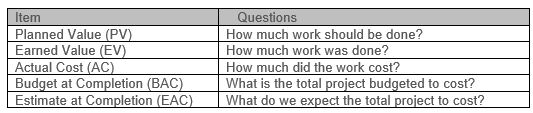
Figure 4: Sample project status report (Reichel, 2006)

Honorable Mentions

  1. Build a cheat sheet of lessons learned/postmortem. Read it to avoid previous issues with new projects, include a list of dos and don’ts from previous projects. Ensure you list the basic items you need for every project and refer to that list for every new project.
  2. Use lists, lists, and more lists to prioritize projects.
  3. Watch for signs that the stakeholders no longer value the project. After months of executing a project, sometimes stakeholders no longer see value or never saw enough value from the beginning. Remember, terminate a project as soon as possible if it no longer makes sense to the stakeholders.
  4. Conduct anonymous end-of-project surveys—this is scary. It is amazing what stakeholders will divulge in anonymity instead of directly to you. Implement their recommendations.
  5. Add a RACI (responsible, accountable, consulted, informed) chart to your organization chart. Again, it is important to know as much as possible about your stakeholders.
  6. Use agile for sprints to complete deliverable units of work, typically every 2 weeks. Ensure that everyone on the project team attends status meetings to discuss accomplishments for today and accomplishments for tomorrow.
  7. Also, use Kanban for simpler projects. It is just three columns on a board with “To Do,” “Doing,” and “Done.” Move tasks from one column to another as you complete them. There is project management software for it, too.
  8. Keep up with emerging trends:
    • Greater reliance on digital and remote teams;
    • A closer connection between projects and strategy;
    • Project management and change management;
    • The emergence of hybrid project management approaches;
    • An emphasis on soft skills; and
    • The impact of artificial intelligence and data analytics (Stobierski, 2020).
  9. Evaluate your organization’s capacity for change:
    • Understand the change saturation/overload condition. Organizations today risk overcommitting resources, resulting in an overload condition and inability to cope.
    • Prevent overload. Balance your organization’s portfolio of programs and projects to achieve critical results.
    • Build change capacity. Build a roadmap for organizational project management that aligns project management practices with business strategies (Harrington, 2014).

Saturday, 2 July 2016

PUBLISHED ARTICLE BY THE BLOG AUTHOR


PLEASE FIND THE LINKS BELOW TO SEE THE ONLINE PUBLISHED BY THE BLOG AUTHOR ON ISSUE.COM.

https://issuu.com/sivasubbiah/docs/wind_turbine_power/1?e=18561198/30000297

https://issuu.com/sivasubbiah/docs/solar_power_project

https://issuu.com/sivasubbiah/docs/project_management

just copy paste the link to learn about articles related to Project Management, Solar & Wind Turbine project. 

Thursday, 30 June 2016

ROLES AND RESPONSIBILITIES OF A PLANNING ENGINEER


A planning engineer has one of the most important roles in construction projects. Planning Engineers are responsible for ensuring that the project will be completed as per project management plan deadlines. He should raise any potential risks before it happens and guide the whole team through the project different stages. 

1. FIELD KNOWLEDGE 

Strong construction background required to understanding the scope of the project and identify the activities and activities dependency. This experience could be gained by working as a Site Engineer for a period of time or by monitoring and observing the work progress.

2. SOFTWARE SKILLS 

He should be familiar with project management terms and techniques such as EVM (Earned Value Management), CPM (Critical Path Method) etc, as PMP (Project Management Professional Certificate) will cover this point.  He should know how to process the planning techniques via software and produce visual aids to help explain the schedule of work. Primavera, MS Project, MS Excel are essential, which are used in the market now.

3. ATTENTION TO DETAILS 

Accuracy is the main core of Planning Engineers works. The main difference between successful planning engineer and another engineer is to pay attention to details, engineering common sense , data analysis and filtration. Planning engineers are dealing with the big amount of data every day. However, they should figure out what this data try to say and not just pass them to others.

4. COMMUNICATION AND INTERPERSONAL SKILLS

Planning Engineers are a key player in a construction project. They communicate almost with the whole project team, attend variance meetings with different parties and prepare a lot of reports. Therefore Good communication and interpersonal skills are required.

5. RESPONSIBILITIES

Simply the planning engineer should prepare a plan to complete the works on time and within budget. This plan cannot be done by planning engineer only. However, the planning engineer responsibility is to coordinate with all project team and collect pieces of information from different parties and put them all together on one workable project management plan.

Ø  Understanding the scope of the project

Ø  Identifying the best series of events in the correct order for the project to finish on time and on a budget.

Ø  Presenting the schedule of work to others in the company and the client organization involved with the project.

Ø  Developing detailed yet simple to understand schedule and graphs
Ø  Providing visual aids to help explain the schedule of work, including bar charts and network diagrams.
Ø  Using specialized computer software to help keep the project on course.

Ø  Monitoring the progress of the project at different stages of its development.

Ø  Making sure the achieved progress on the project fits the progress anticipated in the schedule.
Ø  Keeping in contact with the project manager.

Ø  Making adjustment to schedules if necessary.

Ø  Liaising with individuals on the project .

Ø  Ensuring that all the separate elements of the project fit together and working towards a correct direction.


Thursday, 10 March 2016

Difference b/w Architect and Civil Engineer

Civil engineering and architecture are similar, overlapping majors and occupations, with some key differences.

Architecture

Build public or private structures.Focus on the aesthetic principles of design. In school, you will take more art-related classes and fewer engineering- and science-related courses.Acquire the relevant certifications in the field of architecture.

Engineering

Build public or private structures, with a focus on public structures.Also build hydroelectric dams, canals, roadways, or other structures with useful functions in society.Focus on science and engineering. In college, you will take fewer art-related classes and learn a lot more engineering and physics than you would if you majored in architecture. This major is usually considered more “difficult.”Acquire the relevant certifications in the field of civil engineering.

As you can see, there is a large crossover in what you can do with either degree. As an architect or a civil engineer, you can build public or private structures. Civil engineers typically do a lot more work on large public ventures like airports however than they do on private homes. But that doesn’t mean a civil engineer can’t also build a house.

Architects cannot do everything that civil engineers can do, since they lack the scientific and engineering knowledge required for many jobs. An architect can build a house or even an airport, but probably will not be given the job of designing a power dam or a roadway for example. Those jobs require more technical knowledge and planning, and architecture school doesn’t really give you that knowledge since it is focused more on aesthetics.

Civil engineering’s main drawback is that it is a longer, more challenging pathway, and if you have no interest in technical projects, it would be more logical to avoid doing all that extra work just so you can build houses. Architecture isn’t offered as often as civil engineering however, so you may have an easier time finding a civil engineering course than an architecture course. So in summary, civil engineering is a broader degree field which allows you to do more types of projects after you graduate, but architecture is a more direct route if you already know you want to focus on more aesthetic projects. Talking to an advisor will help you figure out what you should do, but hopefully this gives you some starting guidance.

Self Consolidation Concrete

Self-consolidating concrete or self-compacting concrete

(SCC) is characterized by a low yield stress, high deformability, and moderate viscosity necessary to ensure uniform suspension of solid particles during transportation, placement (without external compaction), and thereafter until the concrete sets.

Such concrete can be used for casting heavily reinforced sections, places where there can be no access to vibrators for compaction and in complex shapes of formwork which may otherwise be impossible to cast, giving a far superior surface than conventional concrete. SCC was conceptualized in 1986 by Prof. Okamura at Ouchi University, Japan.

The first generation of SCC used in North America was characterized by the use of relatively high content of binder as well as high dosages of chemicals admixtures, usually superplasticizer to enhance flowability and stability. Such high-performance concrete had been used mostly in repair applications and for casting concrete in restricted areas. The first generation of SCC was therefore characterized and specified for specialized applications.

The relatively high cost of material used in such concrete continues to hinder its widespread use in various segments of theconstruction industry, including commercial construction, however the productivity economics take over in achieving favorable performance benefits and works out to be economical in pre-cast industry. The incorporation of powder, including supplementary cementitious materials and filler, can increase the volume of the paste, hence enhancing deformability, and can also increase the cohesiveness of the paste and stability of the concrete. The reduction incement content and increase in packing density of materials finer than 80 µm, like fly ash etc. can reduce the water-cement ratio, and the high-range water reducer (HRWR) demand. The reduction in free water can reduce the concentration of viscosity-enhancing admixture (VEA) necessary to ensure proper stability during casting and thereafter until the onset of hardening. It has been demonstrated that a total sand content of about 50% of total aggregate is favorable in designing for SCC.